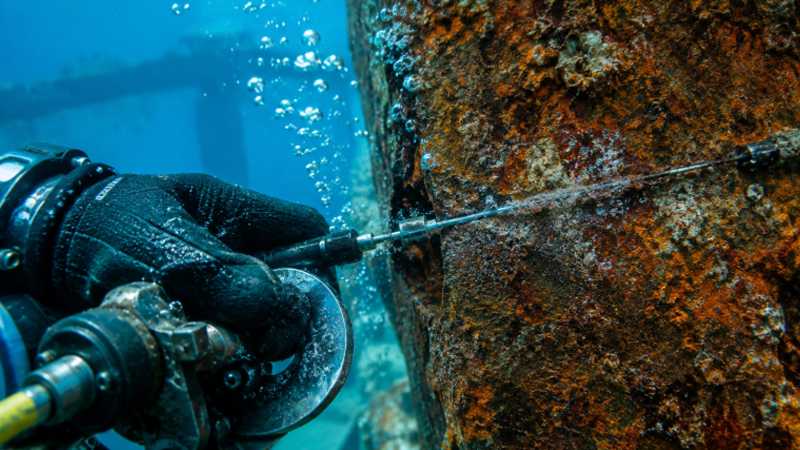
Underwater cutting demands careful preparation because the work combines structural uncertainty, dive operations, lifting, vessel coordination, and changing water conditions. Whether the scope supports repair, removal, or a marine demolition service, a practical plan helps the crew identify constraints before tools enter the water.
The goal is not simply to complete a cut. Teams need to control the material before, during, and after separation, while protecting divers, nearby infrastructure, navigation routes, and the surrounding environment.
Why Planning Matters in Underwater Cutting
Dry-land assumptions can create problems underwater. Visibility may be limited, currents can affect a diver’s positioning, and buoyancy can change how a section behaves after release. Water can also conceal corrosion, cracking, obstructions, or previous repairs that alter the original cutting approach.
A small change in conditions can affect the dive schedule, crane location, vessel holding method, exclusion zone, and recovery sequence. Planning provides the team with decision points in advance, including when to pause work if conditions move outside the approved limits.
Step One: Review the Site Before Mobilization
A site review is a fact-finding exercise. Before equipment arrives, the project team should verify water depth, expected visibility, current and tide patterns, weather exposure, vessel traffic, safe diver entry points, and usable space for support boats, barges, cranes, and recovered material.
The structure also needs close review. Confirm the material type, thickness, reinforcement, connection details, condition, and nearby utilities such as cables or pipelines. A bridge pier may require access around the reinforcing steel, while a dock wall may require controls on debris near berths. A ship component may have confined access, and a submerged pipe may require protection against movement or misalignment.
Step Two: Choose the Right Cutting Method
No single method fits every underwater cutting project. The selection should reflect the material, cut geometry, depth, tolerances, access, tool-support needs, debris generation, and the method for removing the section after cutting.
- Diamond wire sawing can support controlled cuts through substantial concrete or steel sections.
- Core drilling can create circular openings or provide access points for anchors and rigging.
- Hydraulic tools can be useful where compact, controlled power is needed at the work face.
- Thermal cutting may be considered for certain metal work when the dive conditions and project controls support its use.
A simple method-selection checklist should compare the cut size, material, visibility, noise considerations, debris control needs, available power, and recovery plan. The best option is the one that the full work sequence can safely support.
Step Three: Build a Strong Dive and Surface Team
Underwater cutting is a coordinated operation, not an individual diver task. Typical roles can include a dive supervisor, working diver, standby diver, tender, communications support, surface equipment operator, rigging crew, crane operator, engineer, and safety or environmental coordinator.
Each person should understand the scope, stop-work authority, emergency response process, and handoff points between diving and lifting activities. OSHA notes that commercial divers can face hazards associated with limited visibility, cold exposure, cutting, welding, material handling, heavy equipment, and power tools, making commercial diving safety guidance relevant when establishing dive plans and equipment checks.
Step Four: Control the Cut Section
The cut is only one stage of the work. Before the final separation, the team should estimate the section weight and center of gravity, identify pinch points and potential swing paths, confirm lifting capacity, and install rigging when practical.
- Establish where the section will go after release.
- Confirm the crane, barge, and rigging configuration can manage the intended load.
- Define signals between the diver, supervisor, and lifting crew.
- Make the final cut only after the section is secured or its movement is otherwise controlled.
- Move the material to a planned landing, storage, or disposal area.
Water can hide movement until it becomes significant. A section may rotate, float, sink, catch on reinforcement, or shift against adjacent structures. The plan should address these possibilities before work begins.
Step Five: Protect Water Quality and Marine Life
Environmental planning should address debris, sediment, fluids, noise, and wildlife observations. Depending on the location and permit conditions, teams may use containment or recovery methods, keep loose material out of navigation channels, monitor turbidity, and schedule work around site-specific restrictions.
Projects that could affect protected marine mammals may require review of applicable authorizations and conditions. NOAA maintains information on construction-related incidental take authorizations, which can help project teams understand why environmental requirements may vary by activity and location.
Step Six: Improve Communication During the Work
Communication can be harder underwater because visibility, surface noise, equipment, and distance may interfere with normal instructions. The work plan should establish primary and backup communications, clear stop-work commands, emergency recall procedures, crane instructions, and responses to power loss or tool failure.
Pre-Cut Briefing Checklist
- Confirm the cut sequence and final release point.
- Review current, visibility, weather, and vessel-traffic limits.
- Identify who can authorize a restart after a pause.
- Verify the lift crew knows the diver-clearance signal.
- Confirm the standby diver, emergency equipment, and recovery route.
Step Seven: Inspect, Document, and Close the Job
Closeout begins with inspection. The team should check that the remaining structure is stable, all cut sections are recovered or secured, and no wire, rigging, tools, or debris remain in the work area. Dive logs, photographs, measurements, equipment notes, and deviations from the original plan should be documented before the crew demobilizes.
Common Questions About Underwater Cutting
What makes underwater cutting difficult?
Low visibility, water movement, limited access, structural weight, and communication barriers can all complicate the work. The project becomes more manageable when these conditions are evaluated before the dive begins.
How early should planning begin?
Planning should begin during design or work packaging, especially when the scope includes heavy lifts, active vessel traffic, sensitive habitat, or complex diving operations.
What should a dive plan include?
A useful dive plan defines the work scope, depth, equipment, team roles, communication protocols, emergency procedures, weather limits, water conditions, and the material recovery process.
What happens if conditions change?
The crew should pause, reassess, and revise the approach when visibility, current, weather, equipment performance, structural behavior, or traffic conditions fall outside approved limits.
Conclusion
Successful underwater cutting starts well before the first dive. A thorough site review, appropriate cutting method, defined team roles, controlled lift plan, reliable communication, and environmental preparation can make difficult marine work more predictable from mobilization through final inspection.