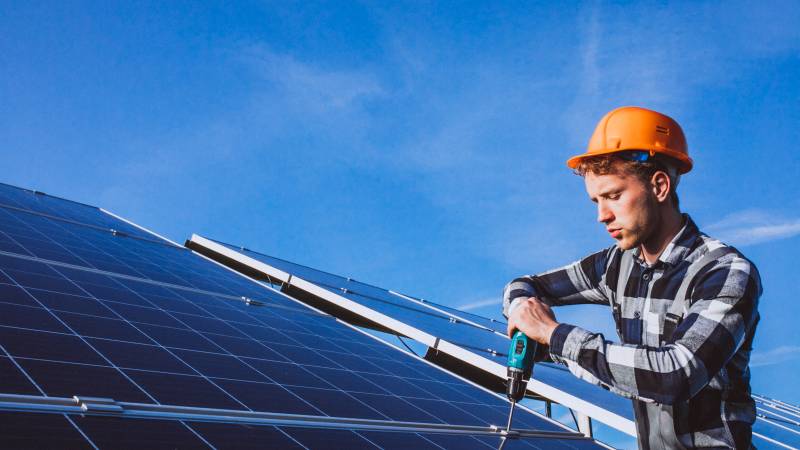
In Phoenix, one valuable resource that is plentiful on commercial properties is open parking space. Instead of leaving these areas exposed to Arizona’s intense heat, businesses can use them to generate solar electricity with canopy systems. Commercial solar canopies installation in Phoenix allows businesses to cover parking spaces with solar panels while producing renewable energy, making this a practical solution for properties with limited roof space.
However, businesses should be aware of the operation, installation and property conditions that must be taken into account before selecting this type of system.
What Are Commercial Solar Canopies?
Canopies that support PV panels over parking lots or other spaces that can be used outdoors. The panels create electricity from the sun’s rays and the building below maintains its original functions.
When considering commercial properties, this may be helpful because it allows businesses not to give up more land for a solar array. Whilst the canopy provides an extra surface area for solar generation, parking spaces are still available.
Why Phoenix Is Well Suited to Solar Canopies
Solar generation is a viable option for commercial buildings, especially in Phoenix, where the sun provides ample power all year round. Solar panels can be installed in parking lots because they may get a lot of direct sun exposure.
This exposure can be put to good use by a good canopy design and also serve as shade beneath as well. This can be especially beneficial in Phoenix’s warmer seasons when cars with covers can be more comfortable for employees, customers, and visitors while in the vehicle.
Benefits Beyond Energy Generation
A commercial solar canopy can serve many other purposes beyond generating electricity. The building also alters the way that the business utilizes existing property.
Direct sun exposure on vehicles can be minimized and a more comfortable parking experience achieved with covered parking. Meanwhile, companies can still make use of their parking lots without setting aside a dedicated area for solar panels.
In buildings where space for a solar array is limited, this combination may be a viable project alternative or supplemental solar system for carports.
What Does the Installation Process Involve?
A commercial canopy project requires more planning than just a canopy over a parking lot. The initial step involves a site assessment to determine how the parking area is laid out, the space available, electrical needs, and the structure type.
The system is then tailored to the specific conditions of the property. Structural engineering is critical as the canopy needs to be able to carry the solar equipment, with proper vehicle clearance and access to the panels.
Once the design and permitting requirements are dealt with, structural, panel and electrical work can be completed. Testing and commissioning are done before the system is used regularly.
Important Factors to Review Before Installation
There are several practical considerations for businesses to consider before proceeding.
Parking Layout: Do not obstruct vehicle traffic, vehicle entry/exit and pedestrian areas with the canopy.
Solar Equipment: The solar equipment requires a supporting structure that will hold the load and shape of the solar equipment.
Electrical Integration: The solar system needs to be properly integrated with the property’s electrical system.
Permitting: Local permitting, inspection and utility coordination may be necessary for commercial projects.
Is a Solar Canopy Right for Every Business?
Not necessarily. Canopies are appropriate depending on available parking area, energy needs, electrical infrastructure and project goals.
Rooftop solar could be suitable for businesses with a large parking area, or those with significant roof space. Additionally, various solar configurations can sometimes be considered simultaneously to determine the most viable configuration.
Conclusion
Solar canopies are a form of solar photovoltaic (PV) system that allows businesses in Phoenix to integrate parking facilities with renewable energy generation, even without the need for a dedicated space for the solar panel installation. These systems can be valuable components of a property’s energy management plan if they are designed properly with site assessment, building design, electrical connection, and permitting.